
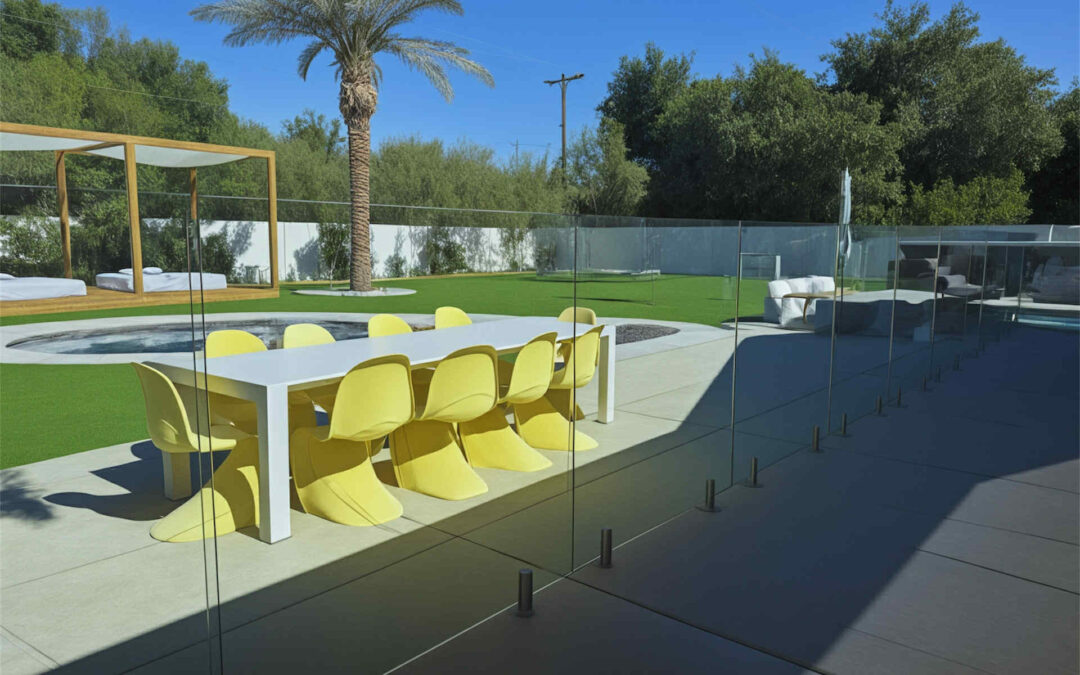
Arizona stands out with the highest pool-per-capita rate, boasting one pool for every 13 people, totaling approximately 505,000 pools.
This high density highlights the state’s arid climate and the value placed on pool ownership for residential leisure and cooling.
Swimming pools offer enjoyment and relaxation but also pose serious safety risks, particularly for young children and underserved populations.
Staying informed about safety statistics is key to preventing accidents and protecting pool users.
Arizona consistently ranks among the states with the highest drowning rates in the United States. As of early 2026, it remains a critical safety issue.
Arizona’s pool fence rules are strict, and local codes are regularly updated. Under A.R.S. § 36-1681, any residential pool that meets the state’s definition must be protected by a compliant barrier. Whether you’re building a new pool or upgrading an existing one, this 2026 guide explains the essentials.
Arizona requires pool enclosures to be at least 5 feet high, with no openings allowing a 4-inch sphere to pass through, and feature self-closing, self-latching gates that open away from the pool, plus be at least 20 inches from the water’s edge, preventing unsupervised child access, with specific local variations.
What the law requires in 2026?
General State Requirements (A.R.S. § 36-1681):
Barrier Height: At least 5 feet (measured from the exterior)
The fence must be five feet tall when measured from the outside of the barrier, not from the ground inside. This helps prevent climbing and keeps the pool area protected from curious kids and pets.
Openings: No gaps larger than 4 inches (a 4-inch sphere can’t pass)
Any openings in the barrier should be small enough that a 4-inch ball can’t fit through. This reduces the chance a child or pet could squeeze through or get stuck.
Gates: Must be self-closing, self-latching, and open outwards, away from the pool
Gates should automatically close and latch on their own after someone passes through, and they should swing away from the pool to prevent accidental access.
Latch Height: At least 54 inches from the ground or inaccessible to a child
The latch must be mounted high enough (or otherwise protected) so children can’t reach it, typically 54 inches or higher, depending on local rules.
Climb Prevention: No handholds or footholds on the barrier (e.g., horizontal bars on the outside)
Horizontal or wide rungs on the outside can create handy grips. The design should minimize or eliminate climbable features to deter climbing.
Clear Zone: At least 20 inches between the barrier and the water’s edge
Leave a buffer zone between the barrier and the pool edge so there’s no easy way to climb from the outside directly into the water, and to give barriers a clean, safe perimeter.
Penalties for Non-Compliance
Failing to follow Arizona’s pool fence laws is more than a safety oversight—it’s a direct violation of state statute A.R.S. § 36-1681. If your pool area does not meet the required standards for fencing, gate mechanisms, or spacing, you are considered non-compliant under Arizona law, and the consequences can be serious.
For first-time violators, Arizona law allows an opportunity to correct the issue before harsher penalties apply. If you receive a citation:
-You can avoid financial penalties by bringing your pool area into compliance within 45 days of the violation.
-You must also complete an approved pool safety course, typically offered through a local fire department or community health organization.
Pool safety negligence is taken very seriously in Arizona courts—especially when children are involved. Even if your property complies with state law, failing to adhere to stricter local codes can still result in liability. A non-compliant pool fence increases the risk of accidents, legal exposure, and potential costs from fines, repairs, or legal action.
By ensuring your pool meets both state and local requirements, you protect your family, avoid penalties, and maintain full legal compliance—whether for an inspection, a property sale, or simple peace of mind.